
Carbon credits allow emissions to be offset by investing in projects that capture or avoid greenhouse gas emissions. For each ton of CO2 reduced, a credit is generated and can be traded.
How it works:
- Generation: From projects such as reforestation, renewable energy, or energy efficiency.
- Verification: Independent entities certify that the reductions are real, measurable, and additional.
- Trading: Credits are bought and sold on carbon markets, both regulated and voluntary.
Market types:
- Regulated: Linked to international commitments like the Kyoto Protocol or the Paris Agreement.
- Voluntary: Companies or individuals voluntarily purchase credits to offset their emissions and improve their environmental reputation.
Benefits:
- Encourage emission reductions.
- Channel funding into sustainable projects.
- Strengthen business commitment to sustainability.
Challenges:
- Require robust verification mechanisms.
- Risk of greenwashing if not paired with real reduction actions.
- Credit quality is key to ensuring environmental impact.
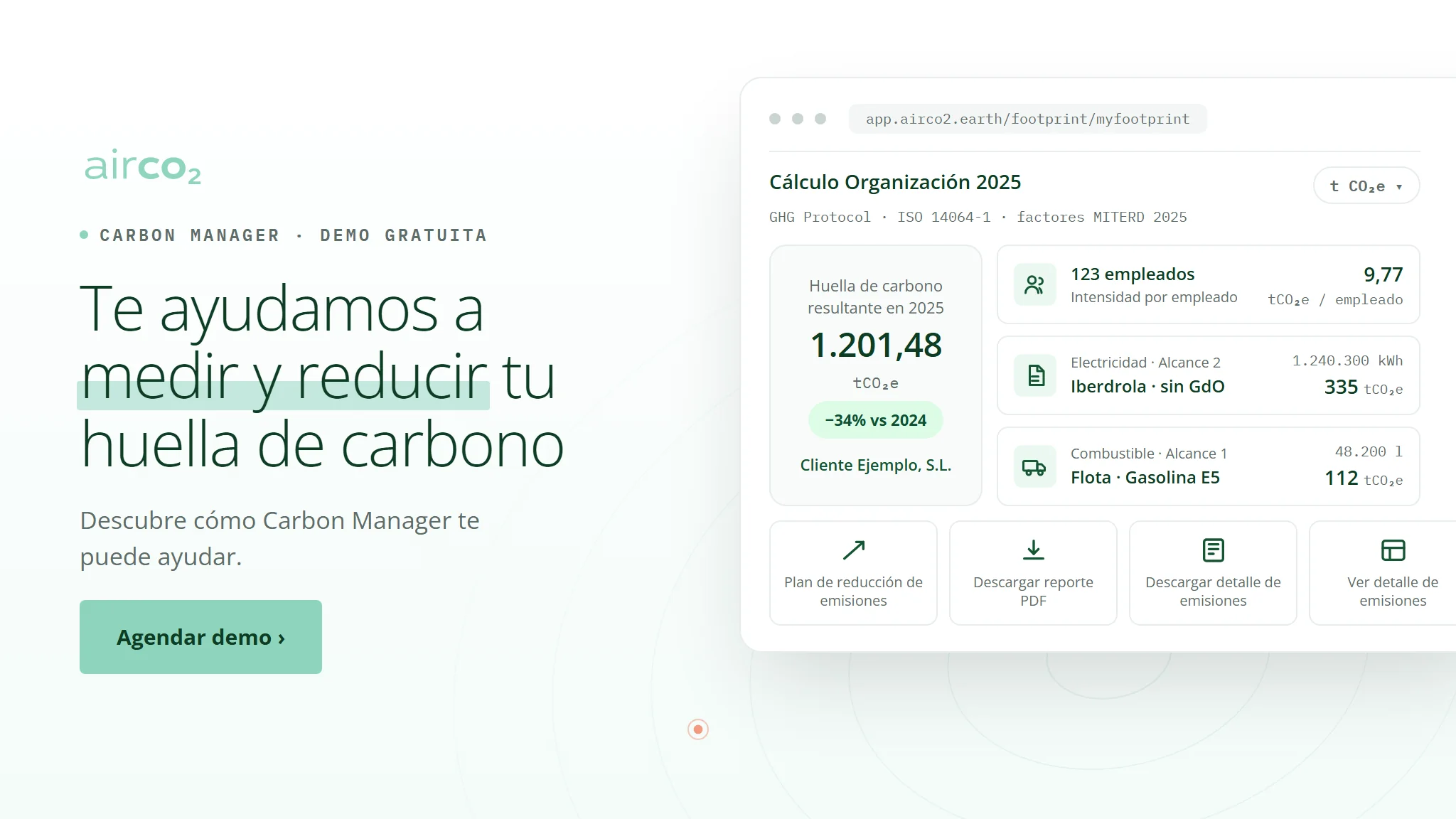
If you want to learn more about carbon credits, you can visit our blog or book a demo to learn how airCO2 can help you integrate them into your sustainability strategy.
Ready for a greener future? Start by calculating your impact!
Schedule a demo with our team and take your business to the next level
Schedule a demo ›